Beauty as Medicine
Reflections on my mother’s life, death, and relationship to beauty
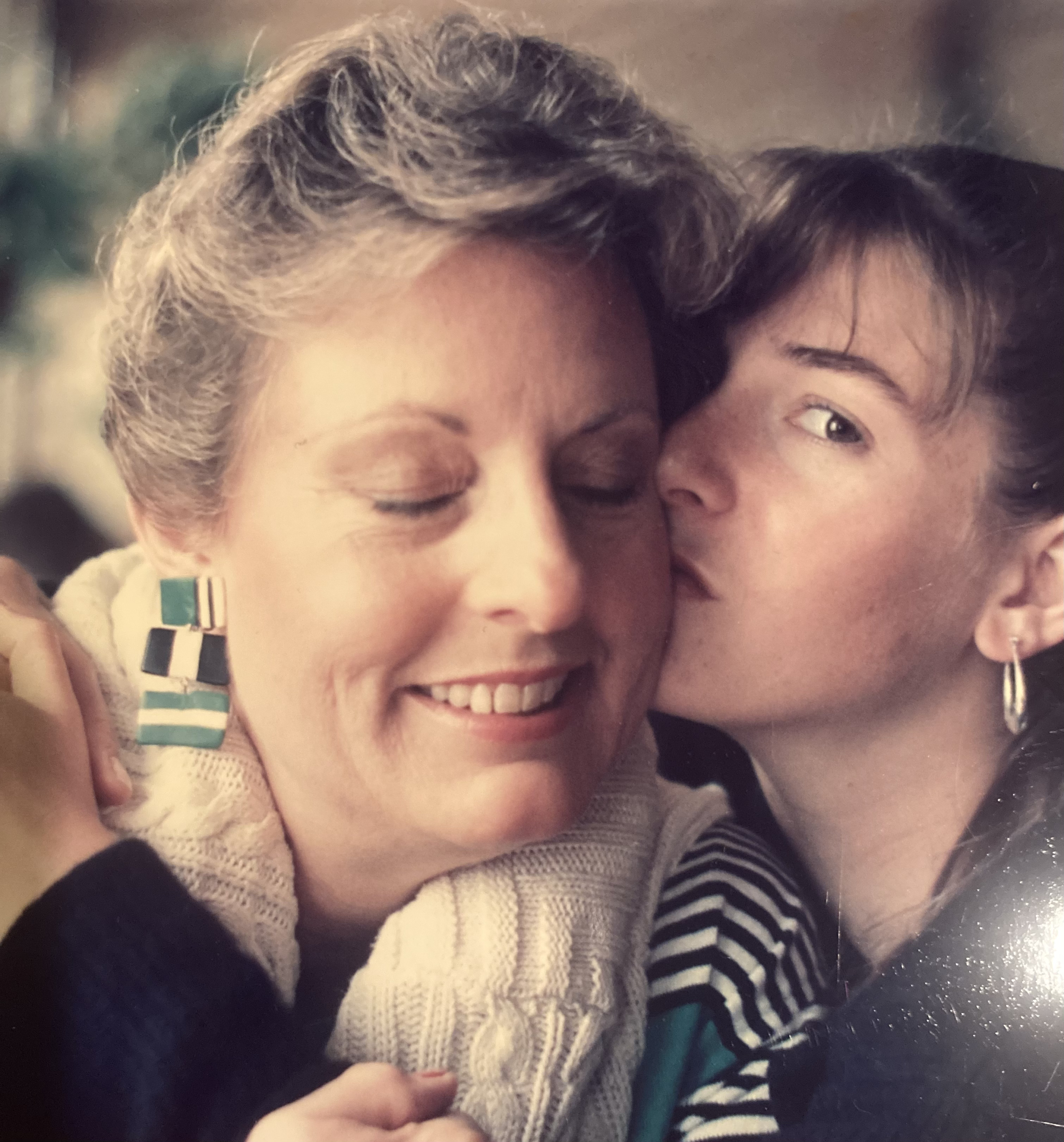
As many of you may know, my mother Janet passed away a few weeks ago.
Amidst all of the logistics and emotions, I’ve been reflecting on her life and what mattered most to her. And I keep coming back to beauty.
For my mother, beauty wasn’t frivolous – it was a core value. From the statement jewelry she wore to the luxurious time she spent doing her makeup to the carefully arranged ceramic pots and seasonal decorations in her home to the particular grace with which she moved through the world – beauty mattered deeply to her. Everyone who knew her felt it, I think.
This isn’t just about paying tribute to my Mom, though. Beauty feels like a medicinal salve for my grieving heart right now. I’m naturally turning towards beauty for integration and healing.
And I’m realizing this is a natural, human, and perhaps deeply yin impulse. For me, for many of us, and perhaps especially for my mother.
Beauty isn’t merely something to admire – it is medicine. It isn’t mere happenstance – it’s a way for us to participate in divine, cosmic creation. And when we receive it, it can nourish us in profound ways.
A Little to the Left Janet
My mother had an extraordinary eye for beauty. She collected paintings and ceramic pots, seashells from the beach, and pine cones. She decorated her home for every season, bringing the outside world in and creating a festive environment for guests that reflected the rhythms of the year.
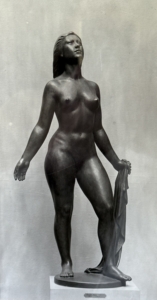
This beautiful statue of a naked woman, was one adorning the walls of her bedroom for my entire life. I grew up seeing how beautiful a woman was in her fullness. It was always displayed prominently.
There were table runners, ornaments, little arrangements in just the right places. And when people helped her decorate, she’d look carefully, tilting her head, and say …
“Hmm … A little to the left.”
Eventually, we started calling her A Little to the Left Janet. She embraced her nickname with glee.
Her critical eye wasn’t about pretense or anybody’s standards but her own. She could feel when something was just right. This was her relationship with beauty, in action. She was creating an environment that felt harmonious, welcoming, and unmistakably hers.
And everyone felt it. People remember the love and joy they experienced in her home. She created an environment where you could settle in, relax, and simply be.
She brought that same sensibility to everything. She adorned herself with beautiful scarves and substantial pieces of jewelry from a large collection. She took her time getting ready in the morning, carefully applying her makeup and arranging her hair. For years, we shared a bathroom, learned about skincare and makeup together, and absorbed each other’s rituals.
When I was young, I’d roll my eyes waiting for her. Now, I see those mornings differently. She taught me, without ever needing to explain it, that how we tend to ourselves matters.
My mother also loved music, art, and the beauty of the natural world. She sang in a symphony chorale, taught art appreciation, and delighted in beautiful music, whether it was Rachmaninoff or John Denver.
Even as her body became increasingly painful and difficult to navigate, she maintained an elegance that was entirely her own. Her scarves were beautifully tied. Her makeup was done. Her head was held high.
My mother knew the importance of allowing herself to receive beauty and really be nourished by it.
Beauty Restores Order
Beauty can return us to ourselves.
When we encounter something beautiful, we may feel an almost immediate shift. The sight of sunlight filtering through leaves. The scent of a flower. A piece of music that makes us stop whatever we’re doing and listen. The satisfying arrangement of objects on a table.
For a moment, the noise quiets. We become present. We remember that this cosmos contains things that transcend the To Do’s and stress and demands and disappointments of our daily lives.
In The Lord of the Rings: The Rings of Power, an Elf named Arondir offers this striking teaching:
“Beauty has great power to heal the soul.”
Beauty is medicine, I firmly believe. Not because it can remove every suffering or mend every wound – it can’t. But beauty can initiate us into a different way of being, if only for a fleeting moment. Beauty gives us a different experience of being alive: one marked by harmony, unity, and balance.
Dostoevsky famously wrote that “beauty will save the world.” What if beauty isn’t a luxury we can do without? What if it is an essential part of our restoration?
We live in a culture that often treats beauty as frivolous, superficial, or expendable. We’re encouraged to prioritize productivity, efficiency, and measurable outcomes. We’re told to push through exhaustion, ignore our bodies, and postpone pleasure until everything else is taken care of.
But what if beauty is not an indulgence we earn after the work is done? What if it belongs at the center of how we care for ourselves?
Beauty and the Cosmos
The words cosmos and cosmetic share the same Ancient Greek root: kosmos (κόσμος). And its primary meaning was order, harmony, structural balance, and appropriate arrangement.
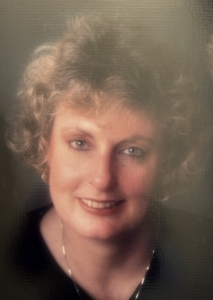
I love how she did her makeup. Always very meticulous. Her eyes are say so much and you can feel her heart.
From that single concept, kosmos branched in two directions:
- Cosmos: The universe understood as a harmonious, beautifully ordered system (as opposed to chaos).
- Cosmetic (kosmētikos): The art of arranging, adorning, or restoring harmony and structural elegance to something.
Our experience of beauty directly reflects the creative principles of the universe. When we perceive beauty, we are perceiving order (as opposed to chaos). When we apply cosmetics or appreciate beauty in art or nature, we are recognizing and participating in coherence, balance, and harmony. When we call something beautiful, on some deep level we are proclaiming, “order has conquered chaos here.”
In biology and astrophysics, beauty is not an accidental byproduct – it is a signal of optimal function. A flower’s beauty reflects the mathematical precision of the Fibonacci sequence, optimizing light absorption and seed density. A spiral galaxy and a seashell both share the geometry of the Golden Ratio. Facial attractiveness strongly correlates with symmetry and biological health—indicators of harmonious cellular organization.
Our experience of beauty, then, is the mind’s way of detecting cosmic efficiency and structural health. Beauty is how the universe feels when it works correctly.
In many ancient cultures, applying paint, jewelry, or garments was a sacred ritual. It was not viewed as vanity, but as a form of alignment. By consciously arranging oneself, an individual stepped out of mundane disorder and into alignment with the cosmic order (kosmos). To practice cosmetics in its original sense is to participate actively in the ongoing artistic creation of the world—bringing deliberate intent, color, and structure to existence. Adornment is participation in creation.
The Feminine Art of Receiving
In Classical Chinese Medicine, yin is associated with qualities such as receptivity, nourishment, stillness, and restoration. Unlike what our modern Western culture tells us, these are not signs of weakness. They are essential aspects of a living system.
Yet many women have learned to live almost entirely in the opposite mode: producing, managing, anticipating, fixing, and caring for everyone else. We become so practiced at doing that we forget how to receive.
Beauty invites us to practice receiving again.
Noticing the colors of autumn. Lingering over the scent of a cup of tea. Listening to a song all the way through. Feeling the softness of wool against our skin. Taking the time to adorn ourselves with a special piece of jewelry simply because we love it.
These acts may seem small, but they ask something of us. They ask us to slow down enough to notice. To let an experience reach us rather than immediately turning it into another task.
Being surrounded by beauty is not the same as receiving it.
We can live in a beautiful landscape and never look up. We can play our favorite music while mentally racing through tomorrow’s obligations. We can fill our homes with lovely things and never pause to appreciate them.
Receiving beauty requires our participation. We have to be willing to stop, pay attention, and let ourselves be affected.
This is where beauty becomes a practice, rather than merely an aesthetic preference.
Adorn. Create. Share.
My mother understood the importance of adorning herself. She loved beautiful clothes, scarves, jewelry, and the ritual of getting ready. She appreciated the beauty of a woman’s body and taught me to care for my own appearance as an expression of self-respect.
Adornment can be a way of honoring the body we inhabit—not because we need to correct our appearance or meet someone else’s standards, but because our bodies deserve our attention and care.
A favorite lipstick. A beautiful fabric. A necklace that makes you feel like yourself. None of these needs to be justified by productivity or practicality.
And beauty isn’t limited to what we purchase. We can create it with what we already have: gathering branches from the garden, arranging flowers, preparing a meal with care, setting the table, or bringing a little of the outdoors into our homes.
We can honor the seasons, too. Letting our homes reflect the turning of the year can be a way of reconnecting with the natural world, rather than allowing the calendar of modern life to dictate our entire experience of time.
There is something deeply empowering about this. We don’t have to wait for a perfect home, a special occasion, a bigger budget, or someone else’s permission to bring beauty into our lives.
And when we find it, we can share it.
Send a photograph of a beautiful sky to a friend. Tell someone about the music that moved you. Invite a friend for tea. Share a meal you’ve prepared with love.
Beauty is not diminished when we share it. It multiplies through our experience of one another.
Beauty and the Sovereignty of Our Healing
Beauty is not a substitute for all forms of physical healing, and even a beauty-filled life still contains suffering. But our understanding of healing becomes impoverished when we reduce it to treating symptoms alone.
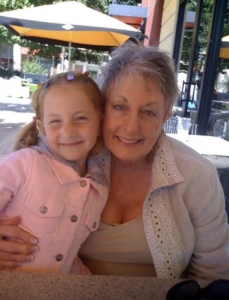
My Mom with Carly on one of Carly’s first trips to buy clothing at the Stanford Mall & go to The American Girl Doll store.
We are more than a collection of problems to be diagnosed and corrected. We are living beings who need nourishment, meaning, connection, pleasure, and the freedom to participate in our own well-being.
Our sovereignty begins when we recognize that our care is not something to outsource.
Practitioners may offer valuable knowledge and support, but no one else can notice the particular way sunlight makes us feel peaceful, the song that helps us breathe more deeply, or the ritual that brings us back into relationship with ourselves. We must learn to listen, discern, and take an active role in what nourishes us.
This is not another demand to optimize ourselves. It is an invitation to stop abandoning ourselves.
When we see or hear or otherwise encounter something beautiful, something happens on a physical level. When we fully receive something beautiful – the geometries of a harmonious image or sound, in lovely order – it reminds our body to restructure itself more harmoniously, on a cellular level. This is one way beauty functions medicinally.
My mother gave so much to the people she loved. She also found real nourishment in beauty, and I am grateful for the ways she taught me to recognize it.
I don’t want any of us to wait until we’re depleted to discover that our own well-being matters.
We don’t need to earn beauty. We don’t need to justify it. And we don’t need to wait for someone else to prescribe it. We can begin now, with what is already available to us.
A Practice: Soak It In
Today, I invite you to spend a few minutes receiving beauty.
Choose something that draws your attention. It might be a flower, a piece of music, a beautiful object, the landscape outside your window, or the feeling of a soft garment against your skin.
Pause.
Let your attention settle on the experience. Notice its colors, shapes, textures, sounds, or scent. Notice what happens when you stop trying to accomplish anything with it.
You don’t have to analyze it or turn it into a lesson. You don’t have to be grateful in the right way or feel anything in particular.
Simply allow yourself to receive.
Then ask yourself: What in my life feels nourishing? What would I like to invite more of? Where have I been treating my own needs as optional?
Perhaps there is something you can change today. A corner of your home you can make more beautiful. A song you can listen to without multitasking. A meal you can prepare and savor. A piece of jewelry you can wear just because it delights you.
Start there.
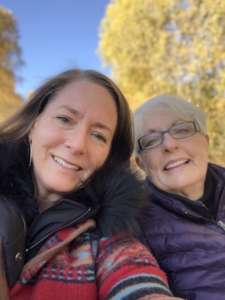
Mom & Me on a grand adventure of a trip to Aspen to the John Denver Memorial Concert
My mother, Janet, spent her life creating beauty around her. Through her care for her home, her adornment, her music, and the turning of the seasons, she helped create a world in which other people could feel welcomed and loved.
I carry that legacy with me. And I want to take it further: to understand beauty not only as something we offer the world, but as something we allow ourselves to receive.
May we learn to recognize it. May we make room for it. May we remember that tending to the beauty of our lives is one way of tending to ourselves.
This is beauty as medicine.
P.S. Going through this death portal as my Mother has passed has been such a gigantic experience for me. There is so much to share with all of you. There is much much much more to come…but this to just launch the beginning of the sharing.


